
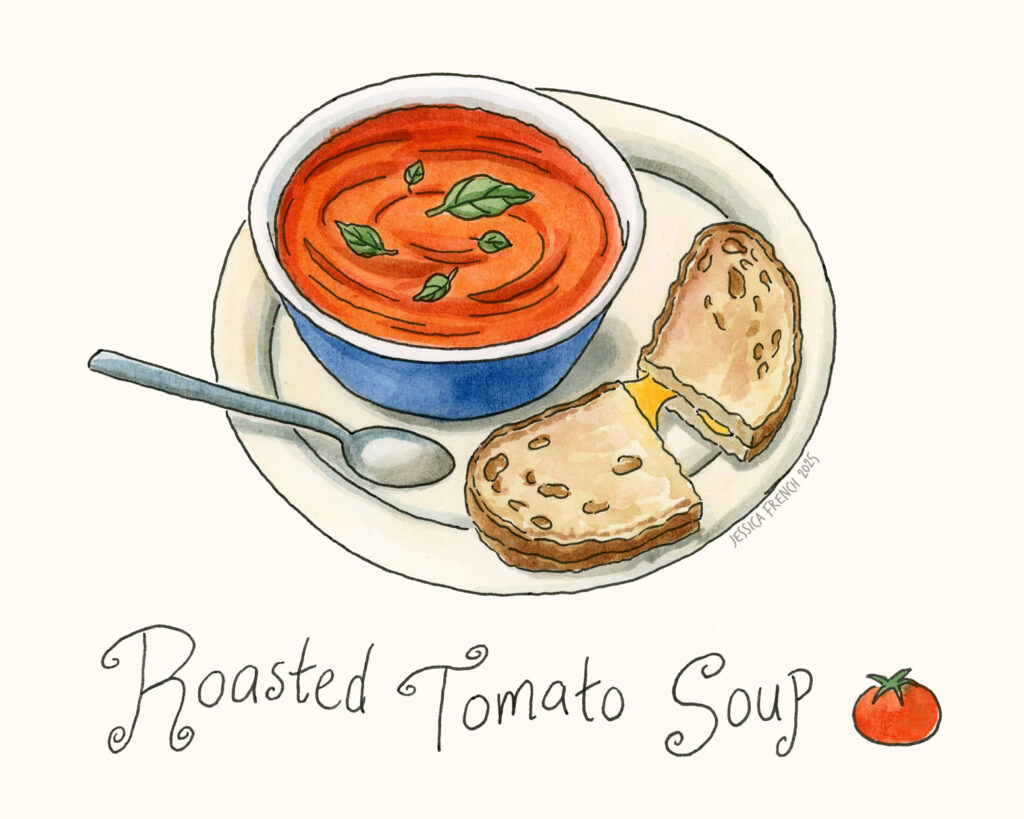
If you have ever grown your own tomatoes, you know there is nothing better than picking a perfect, ripe heirloom tomato from your garden, carving it into thick slabs, and eating the still-warm slices with just a little salt. The thought conjures up images of decadent tomato pies, humble tomato sandwiches, and artfully arranged caprese salads. It’s the stuff of homesteading dreams.
But the truth is that not every tomato is perfect. Whether it’s a soft spot, a split from heavy rains, or a nibble from an unidentified critter (I suspect you, Mr. Raccoon), many things threaten to mar your tomatoes. And when it gets late in the season, if you’re like me, you may find yourself overloaded with such tomatoes–and they need to be used up soon.
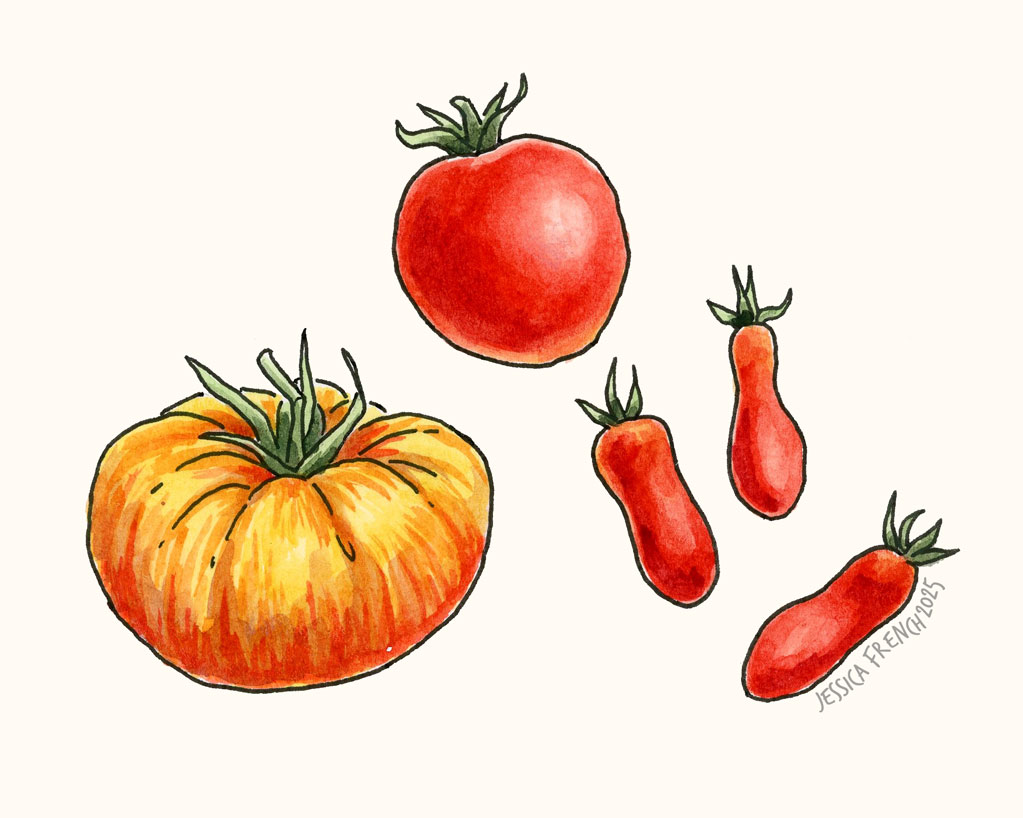
Sure, pasta sauce is always great. But I’d argue that soup is a better destination for a tomato that’s past its prime. Firstly, what is more nostalgic and comforting than a bowl of tomato soup? Except maybe one accompanied by a grilled cheese sandwich? It’s a bonafide crowd pleaser. Secondly, late season tomatoes intersect beautifully with the much anticipated “soup season.” Thirdly, after cutting out the bad spots of those tomatoes, you’re left with an array of odd shapes and sizes. With soup, we get to send those bits and bobs through the blender and then–unrecognizable!
Now, sometimes, fresh tomatoes can result in a soup that is a little acidic. We will remedy that in a few ways, discussed below.
Roasting Fresh Tomatoes
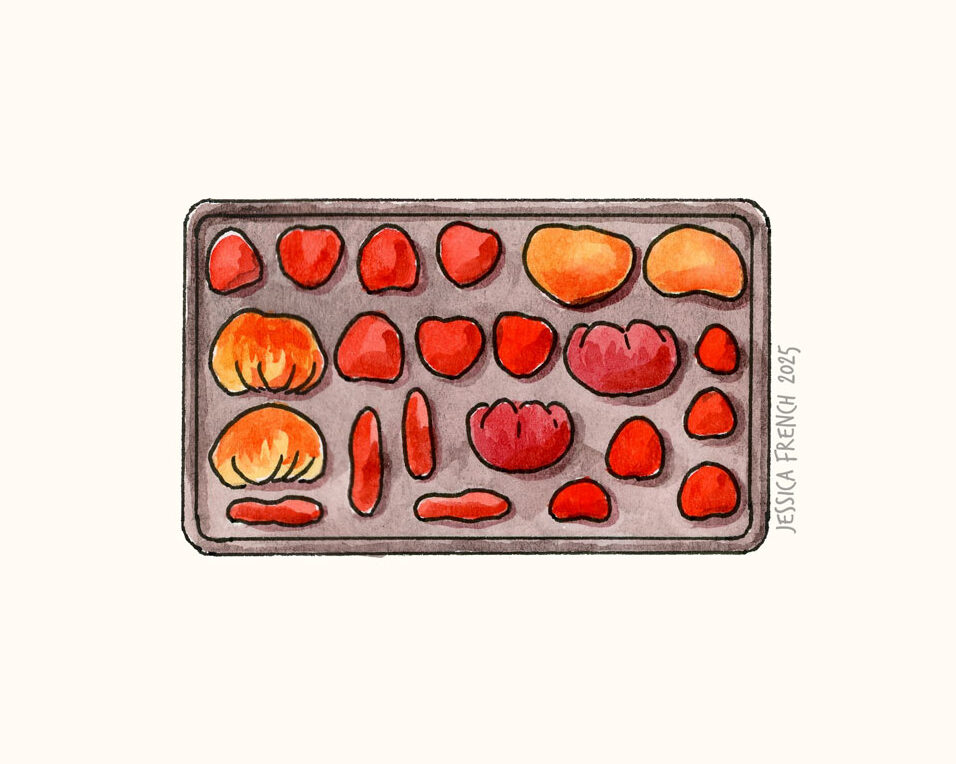
First, we will roast the tomatoes in the oven before adding them to our pot. Roasting, in this case, has several purposes:
- Roasting is an easy way to remove the skins. By blasting the tomatoes with high heat, the skins will blister, and later can be easily plucked off. No blanching and peeling required!
- The oven will give us a head start on reducing the tomato juices. Fresh tomatoes have a ton of water, and roasting allows a lot of it to evaporate off while we prep other ingredients.
- The aforementioned acidity will be offset by caramelization, which will occur in the roasting pan once we’ve achieved enough evaporation.
Building Caramelization
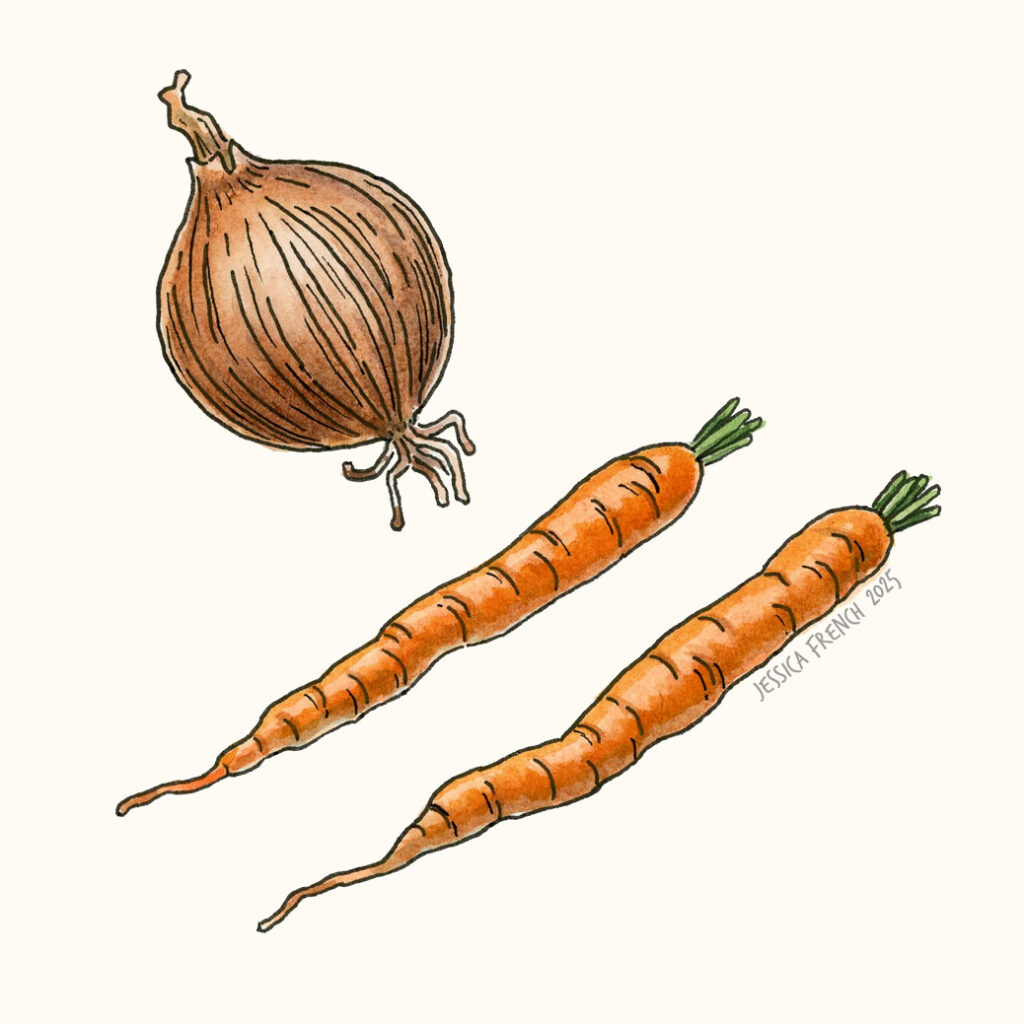
I like to add more caramelization in the form of butter-sauteed onions and carrots. The vegetables and butter will brown and add an even more complex flavor. Our aim is a sweet, slightly smokey, and luscious tomato soup. Some chopped basil gives it a bit of freshness.
Balancing Acidity
Now if, even after all that, the soup has too much acidic bite, sugar can help. Another trick I learned recently (from Stella Parks, no less) is to add a small amount of baking soda. It makes sense–baking soda reacts with acid and neutralizes it. So adding ¼ teaspoon can do the trick by taking that sharp edge off.
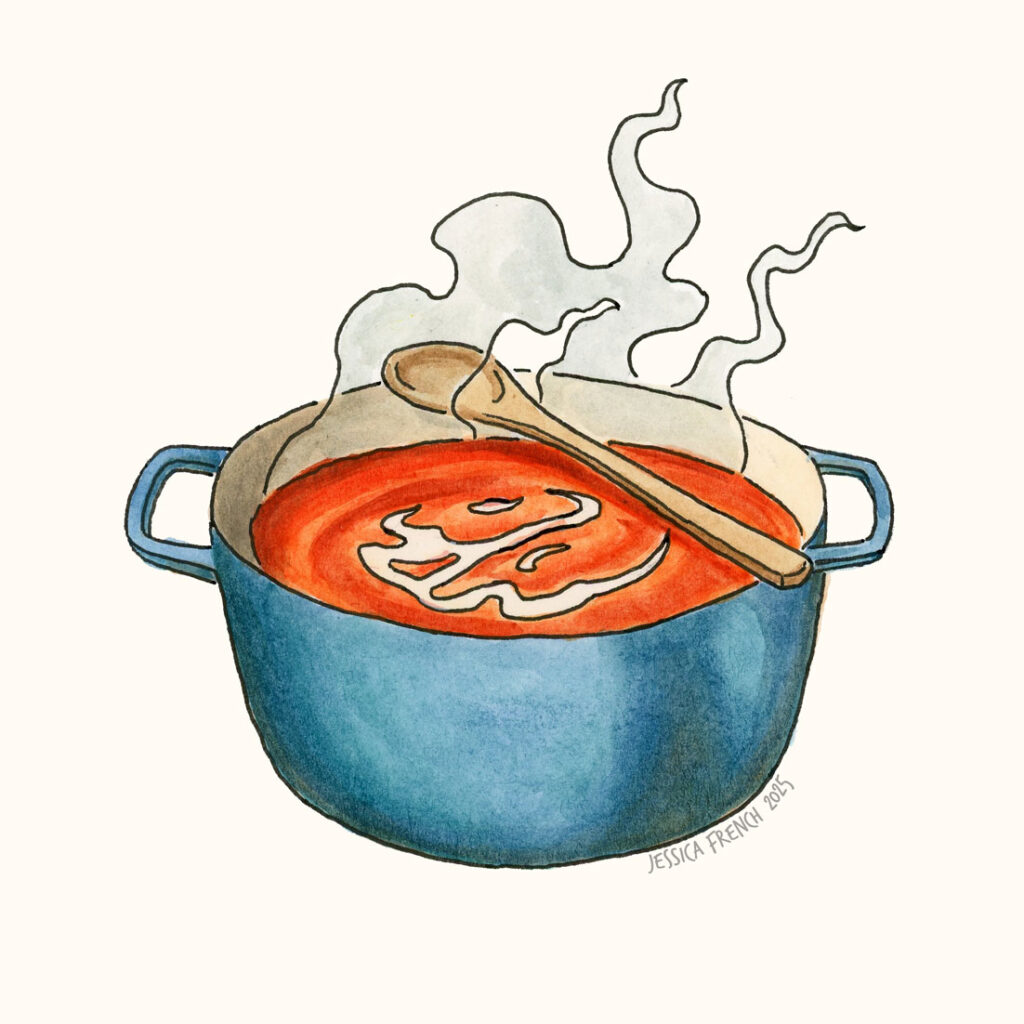
Once the taste is to your liking, you can blend. I prefer a little texture in my soup, but if you want something velvety smooth, then blitz away! And finally, I add a little heavy cream (though not as much as some cooks might–use discretion). Cream adds body and silkiness to the soup, and makes it a little more satisfying.
I dare you to sit down with a bowl of this and not feel a little joyful. If not for the comforting hug that is tomato soup, then for putting to good use something that many might consider trash. If we can’t achieve zero waste, then at least we can practice ingenuity in using every part of what we produce. This, to me, is what it means to be a farmer, gardener, or grower. Give every thing a chance at another life.
And I’ll get in line for another bowl of soup. Yum!
Roasted Tomato Soup
Ingredients
Method
- Preheat oven to 450 degrees F. Position racks in the upper and lower thirds of the oven.
- Prepare two rimmed baking sheets or roasting pans. Core tomatoes and cut away any soft spots. Halve each tomato (or quarter if particularly large) and place cut side down on baking sheets, ensuring each tomato has contact with the baking sheet and a little wiggle room. Do not overcrowd!
- Drizzle tomatoes with olive oil. Place baking sheets in oven and allow to roast, checking and rotating pans every 15 minutes. Roast for about 30-45 minutes total, or until the skins of the tomatoes are blackened and the juices at the bottom of the pans have reduced and started to caramelize. Allow tomatoes to cool slightly.
- While the tomatoes roast, chop the onion and carrots. Melt the butter in a large heavy-bottomed pot or Dutch oven over medium-low heat. Add the chopped onion and carrots and allow to cook, stirring frequently, until the vegetables are soft and golden brown. This should take about 20 minutes—don’t rush, go low and slow!
- Once the tomatoes have cooled, the skins should easily come off the flesh by simply lifting them off with your fingers. After all the tomatoes have been skinned, add them and their juices to the pot, along with the chicken broth.
- Bring the soup to a boil, then lower heat and simmer for 20-30 minutes, or until the tomatoes have broken down a little and the soup has reduced slightly. Remove from heat. Add the chopped basil.
- Using either an immersion blender, or by transferring your soup to a standing blender (see note), puree the soup until it is your desired consistency. I like mine to have a little bit of texture, but if you like a velvety smooth soup, you can puree to your heart’s content!
- Add the salt and pepper, adjusting to taste. If the soup tastes too acidic, you can add a tablespoon of sugar, or ¼ teaspoon of baking soda (see note). When the soup is seasoned well, stir in the heavy cream.
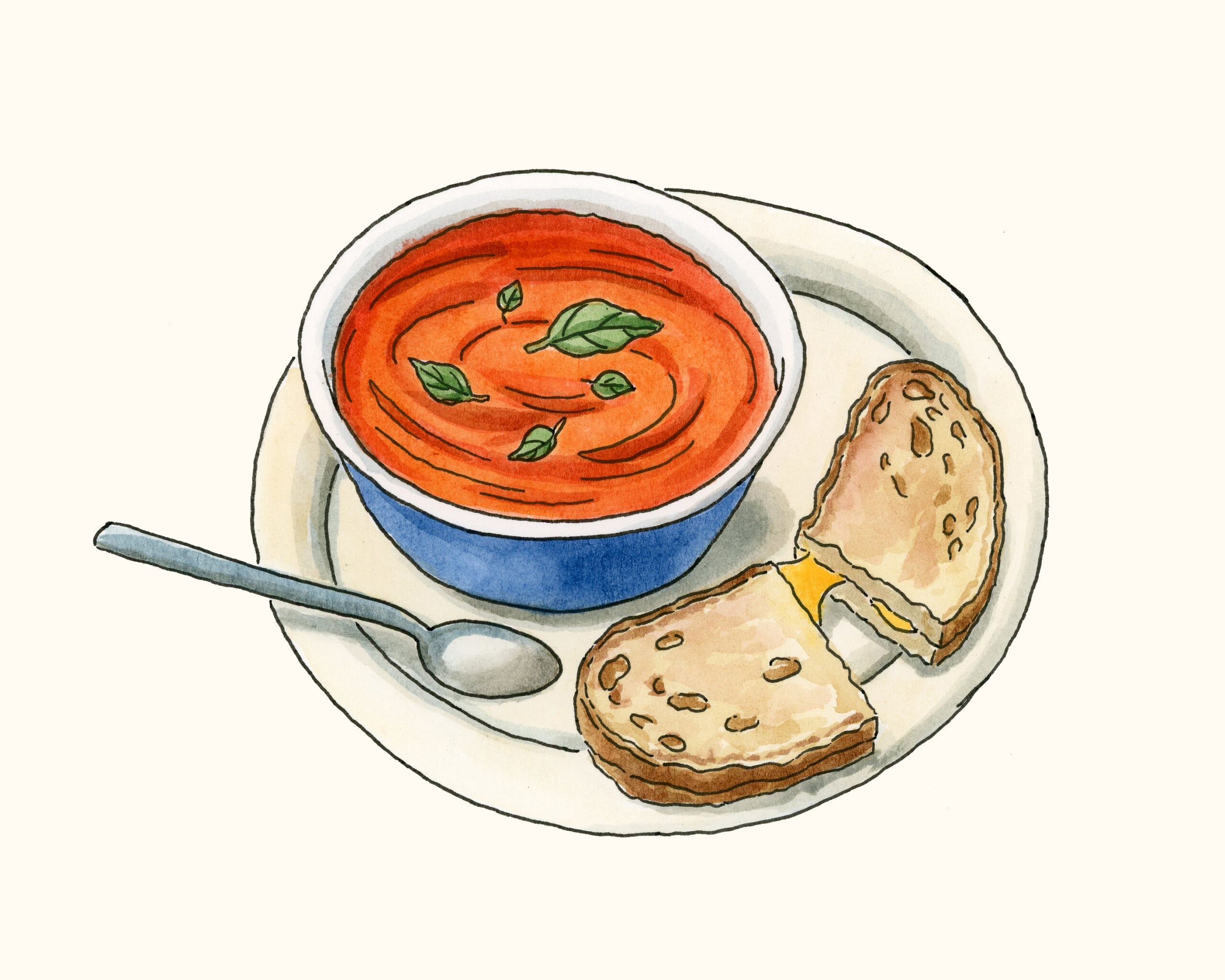
- Serve in bowls with an extra dash of cream and julienned basil on top. Soup stores well in the fridge for up to 4 days or can be frozen for up to 3 months.
Notes
- When fresh tomatoes are not readily available, canned tomatoes work just as well. Use three 28-ounce cans of whole tomatoes and skip the roasting and skinning steps.
- When using a standing blender to puree any hot liquid, be sure to leave several inches of space between the liquid and the lid. While blending, hold the lid down with a pot holder. The steam can force the lid off of a blender and spray hot soup all over your kitchen. So use caution!
- Sometimes even after cooking down for a while, tomatoes can have an unpleasant acidic bite. If this is the case, a little sugar can be added (start with a tablespoon, then taste again). Alternatively, a small amount of baking soda will chemically neutralize some of the acid. Start with ¼ teaspoon, and taste to see if it needs more. I advise against using more than ½ teaspoon, as too much baking soda can give a bitter taste.