
Before my partner and I started growing our own food, I never would have guessed how up and down the harvests would be. One minute, you’re planting a bed of tomatoes, hopeful for even one juicy fruit. The next minute, you’re looking at tens of pounds of tomatoes sitting on your counter that need to be used now (thankfully, tomato soup can solve this problem). Then, the tomatoes are dried up and you’re wishing for more. Nothing demonstrated this concept of “feast or famine” better than when we decided to grow our own shiitake mushrooms last spring. Now I know that drying my mushrooms is the best way to keep them around all year. Plus, you can do it without a dehydrator.
What Are Shiitakes?
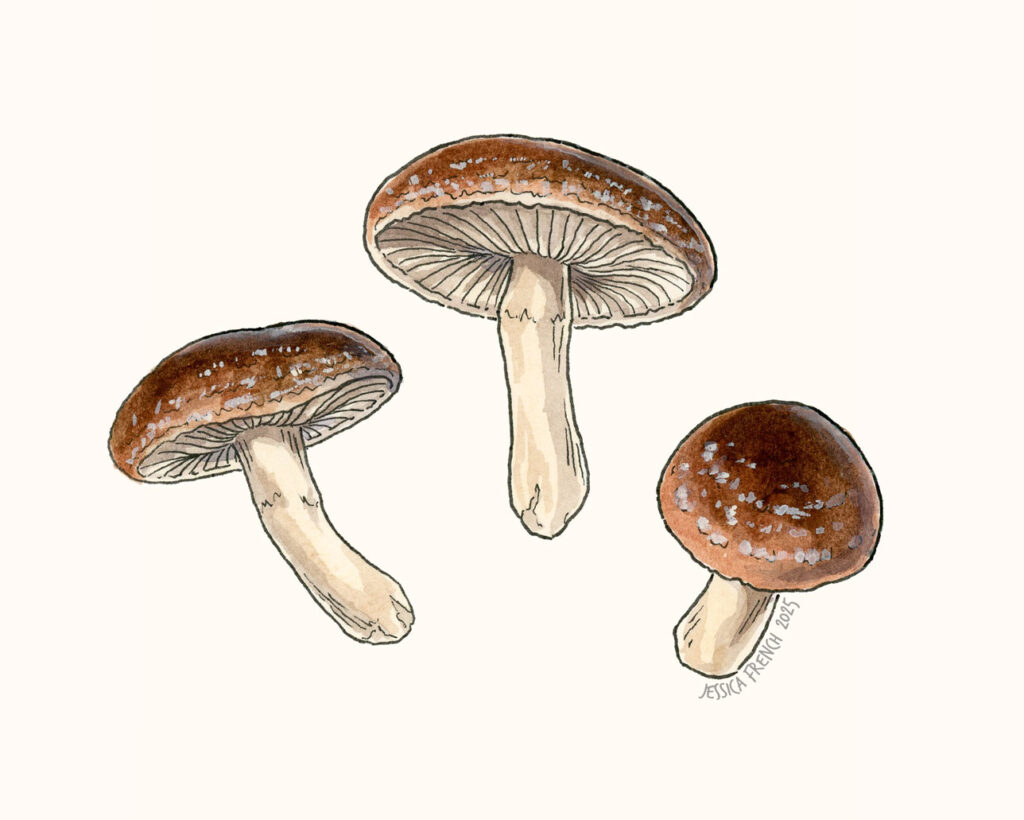
Shiitakes are an East Asian variety of mushroom commonly grown around the globe. Featuring brown caps and elegant woody stems, the shiitake is known for its intense nutty and meaty flavor. Though many grocery stores stock fresh shiitakes, Asian markets will often have the dried version, as well. Dried shiitakes can be rehydrated to use just like fresh, or thrown directly into a broth to add flavor. Use them in ramen, pasta, stir fries, or risotto. You can even throw them right on top of pizza before cooking—no rehydrating required! Their flavor is more intense than fresh, even after rehydrating, making them an excellent pantry item to keep around for a rainy day.
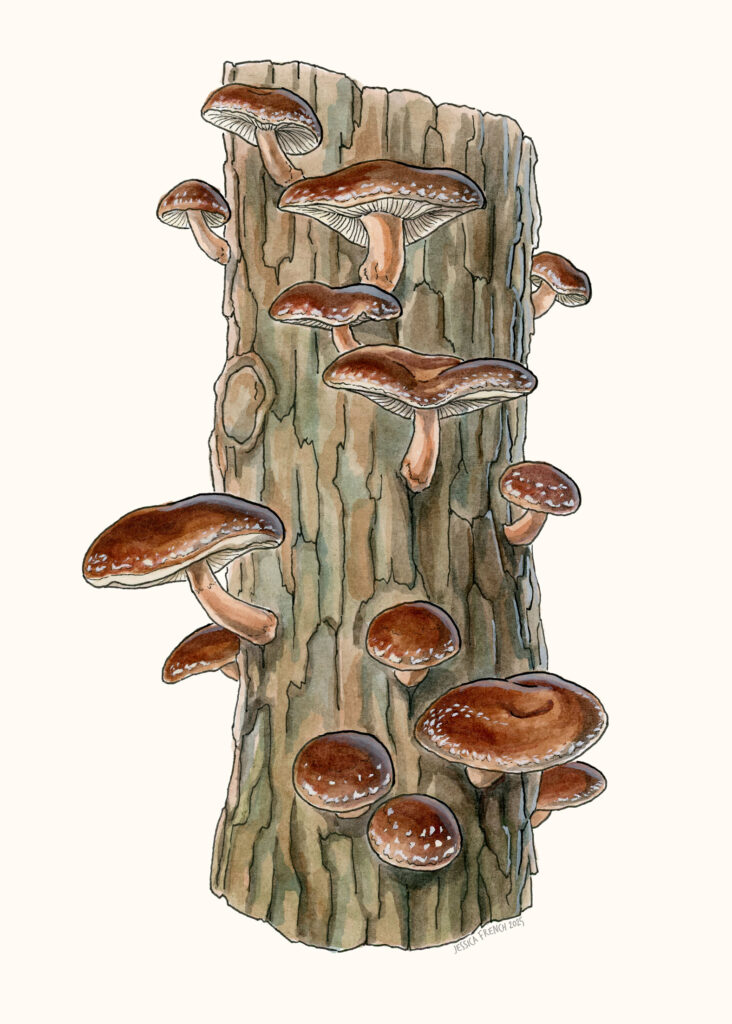
When we decided to grow mushrooms, shiitakes seemed like the obvious beginner’s choice. Besides being incredibly flavorful, they can be grown on hardwood logs, which we had just acquired after cutting down some oak branches. Someday, after more experience, I may make a post all about growing your own mushrooms. But for now: equipped with a drill, a bag of mushroom spore (which can be bought online), and a shady spot in the backyard, we were in business.
Growing Mushrooms Requires Patience
Even though growing mushrooms is pretty hands-off, it’s not surprising that most gardeners don’t attempt it themselves. For one, the special growing medium (hardwood logs) makes it quite different from other crops. Secondly, it can take quite a long time to get your first harvest. We prepared our mushroom logs in April of 2024, hoping to harvest sometime in the next year. It turned out we only got a significant harvest in August 2025. How’s that for playing the long game? It wasn’t until after several weeks of intense rain here in North Carolina that we got the mother lode of mushrooms.
Drying Shiitake Mushrooms
With more shiitakes than any sane people could eat, we needed a way to preserve them. Some googling later, I found that drying our mushrooms would be the best way to keep them around for the foreseeable future.
Drying mushrooms is easy, and doesn’t require a dehydrator. If you live in a dry climate, you can just spread them in a colander or on a wire rack in a hot place and they’ll dry themselves over a day or three. If it’s at all moist or cool where you live, however, oven-drying is your best bet for avoiding mold.
It’s worth mentioning that this method can work with any mushroom, but dried shiitakes have a particularly intense umami flavor, making them a choice option.
Prep the Mushrooms
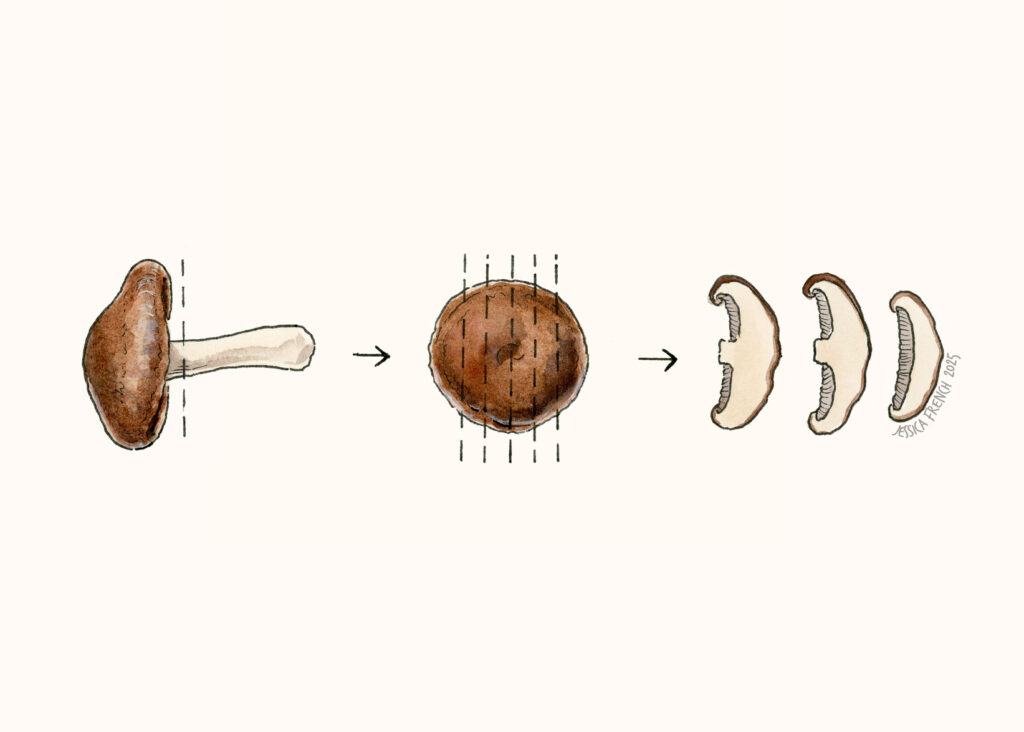
Shiitakes have a tough woody stem, so you’ll want to cut them off. But don’t throw those stems away! They can add lots of meaty flavor to soups or broths. I toss them into a bag of vegetable scraps I keep in my freezer for future stock-making.
Once de-stemmed, slice the caps into ¼ slices. Lay them out on a wire rack placed over a baking sheet. Use as many pans as necessary so the mushrooms don’t overlap.
Low and Slow
Place your pans in the oven and prop open the oven door with a wooden spoon. This will allow moisture to escape. Then set your oven to the lowest temperature it will go. For most ovens, this is 170o F. It will take 2-3 hours to dry on this setting.
Check your mushrooms at least once an hour, until they’re completely dry to the touch and steam is no longer coming out of the oven.
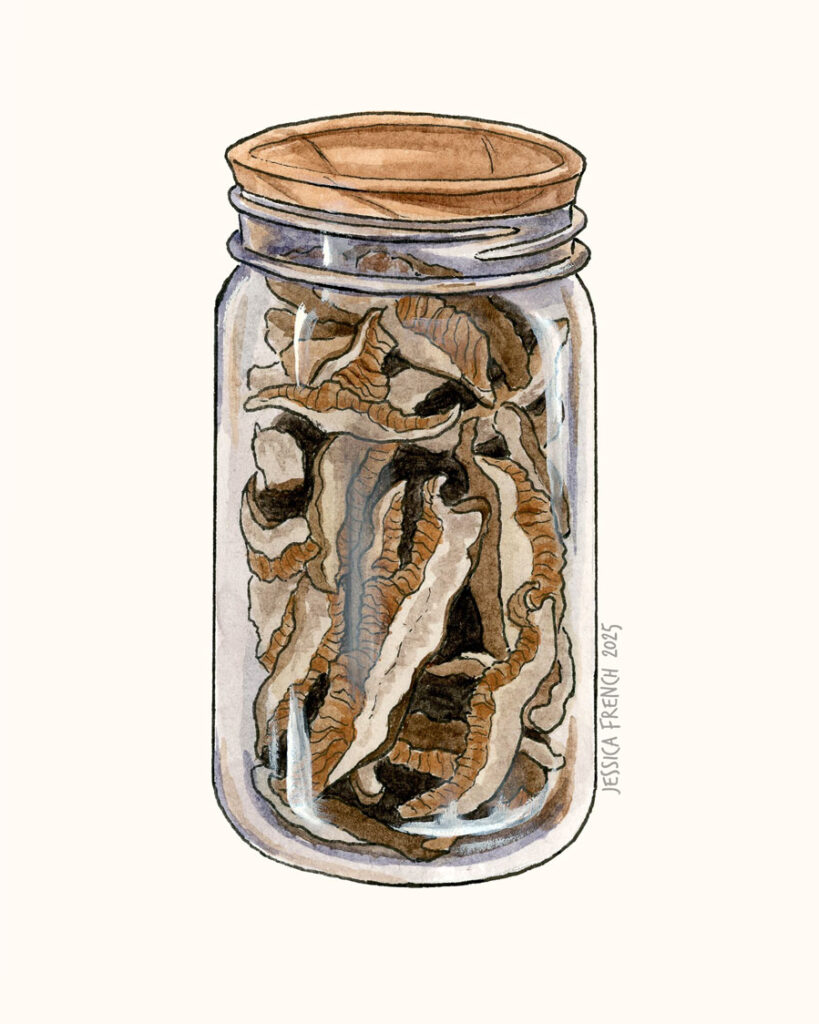
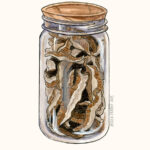
Dried shiitakes can be stored in a jar for up to a year. Rehydrate them by soaking in hot water for 15-20 minutes. Then you can use them like you would fresh mushrooms. Be sure to save the soaking water, as it’s a delicious base for sauces and a flavorful cooking liquid for rice or noodles.
Please leave a comment with your favorite way to use dried mushrooms. Happy shrooming!
Dried Shiitake Mushrooms
Materials
- Fresh shiitake mushrooms or other type of mushroom
Instructions
- Wipe any dirt off the shiitakes with a damp cloth.
- Cut the woody stems off each shiitake. The stems can be saved for stock or soup. Slice each shiitake cap into ¼ inch slices.
- Arrange the slices on a wire rack set over a baking sheet. Do not overlap the slices. Place the pans in the oven and prop the oven door open with a wooden spoon to let moisture escape.
- Set your oven to its lowest possible temperature. Most ovens will go as low as 170o F, in which case it will take 2-3 hours to dry. Check the shiitakes every 30-45 minutes after the first hour.
- Remove the shiitakes when they are totally dry to the touch and no more steam is escaping the oven. Dried shiitakes can be stored in a jar or other airtight container for up to one year.
Notes
- Normally I’m a proponent of washing mushrooms, but in this case, we don’t want to prolong our already long drying process by introducing extra water.
- To rehydrate dried shiitake slices, soak in hot water for 15-20 minutes. Drain and cook as usual.